

Workday Benchmark: How to Know If You're Overpaying Before Your Next Renewal (2026 Data)


Workday renewals rarely become expensive because of one obviously unreasonable line item. Overpayment usually accumulates through a combination of inflated headcount assumptions, unused modules, unclear discount structures, automatic escalators, and contract terms that remove flexibility.
That makes one question critical before your next renewal:
Is your Workday agreement priced within a defensible market range: or are you paying a premium because the vendor set the anchor first?
A credible Workday benchmark can answer that question. But benchmarking is not simply comparing your total annual contract value with a number found online. You need to normalize the data, examine your licensing structure, and connect pricing to the terms that determine your future cost.
This guide explains how to diagnose overpayment using 2026 benchmark data, what to measure, and where negotiation leverage is most likely to exist.
Important: Workday does not publish a universal price list. The ranges below are directional benchmarks from independent market research and reported enterprise transactions. Your appropriate target depends on employee count, modules, geography, deployment scope, term, and contract structure.
What a Workday benchmark should measure
A useful benchmark should answer more than “What discount did we receive?”
It should measure your effective cost across several dimensions:
- Per employee per year (PEPY) for workforce-based products
- Per user per month or year for named-user products
- Annual contract value (ACV) by module
- Discount from the relevant commercial baseline
- Annual price escalator
- Headcount commitments and true-up rules
- Unused or underused modules
- Flexibility to reduce, add, or reallocate licenses
- Fees outside the headline subscription price
This matters because a large discount can still produce a poor deal. For example, a 40% discount paired with a 5% annual escalator, fixed headcount commitments, and unused modules may cost more over three years than a smaller discount with better protections.
The right question is not “How much did Workday discount the proposal?”
It is:
What will we pay for the functionality we actually use, over the full term, under realistic workforce conditions?
The 5 diagnostic checks that reveal overpayment
1. Calculate your effective unit price
Start with the simplest calculation:
Effective PEPY = Annual module cost ÷ contracted employee count
For named-user products:
Effective annual user price = Annual module cost ÷ contracted named users
Do this separately for each major component rather than dividing total ACV by total employees. A blended number can hide expensive modules inside a bundle.
One 2026 benchmark set reports the following enterprise-level directional ranges:
| Workday component | Indicative enterprise benchmark |
|---|---|
| Core HCM | $14–$22 per employee per year |
| Payroll | $11–$18 per employee per year |
| Recruiting | $7–$12 per employee per year |
| Talent Management | $6–$10 per employee per year |
| Learning | $4–$8 per employee per year |
| Financial Management | $8–$14 per employee per year |
| Adaptive Planning | $1,400–$2,200 per finance user per year |
These figures come from published 2026 renewal research by WorkdayNegotiations. Other market studies report higher delivered pricing when they measure broader bundles, monthly rates, implementation scope, or more complex enterprise footprints.
That difference is not a contradiction. It demonstrates why benchmark comparisons must be like-for-like.
If your effective rate sits materially above the appropriate range after accounting for scope and complexity, you may have a pricing gap worth pursuing.
2. Separate deployed functionality from purchased functionality
Workday bundles can make unused functionality difficult to see. Review each module against four categories:
- Live and business-critical
- Live but underused
- Purchased but not deployed
- No longer required
Pay particular attention to products bought against future plans. A module that was “planned for phase two” three years ago may still be generating subscription cost without delivering value.
This is especially important for planning products and workflow-based packages. Recent Workday pricing research from Redress Compliance found that customers without documented model and workflow counts can overpay materially because the vendor’s estimate becomes the default sizing assumption.
Before renewal, ask:
- How many users are active?
- How many users are provisioned but inactive?
- Which workflows are live?
- Which modules have not passed deployment milestones?
- Which features are being handled outside Workday?
- What percentage of the purchased footprint is likely to be used in the next 12 months?

3. Challenge the headcount forecast
Workday pricing is often tied to employee or worker populations. That creates a major risk: paying today for growth that may not occur.
Your renewal analysis should distinguish between:
- Employees
- Full-time equivalents
- Part-time employees
- Contractors
- Seasonal workers
- Contingent workers
- Acquired employees
- Divested employees
- Regional populations excluded from the agreement
Then compare your contracted count with actual historical averages and your approved workforce plan.
If you are close to a volume breakpoint, the answer may not be to accept Workday’s proposed band. You may be able to negotiate favorable pricing based on a documented forecast: or negotiate a more flexible true-up structure that adjusts in both directions.
An upward-only true-up means Workday benefits when your workforce grows, while you continue paying for capacity when it shrinks. A stronger position includes:
- Bidirectional true-up rights
- Downward adjustment at renewal
- Protection against automatic band resets
- Credits for material workforce reductions
- Clear treatment of mergers, divestitures, and restructurings
4. Audit the escalator, not just the discount
The annual escalator is one of the most overlooked sources of renewal overpayment.
Published 2026 research indicates that Workday proposals may open with annual increases in the 3%–7% range, while benchmark-informed buyers often target a cap between 0% and 3%, depending on leverage and deal structure. Another independent SaaS benchmark found that Workday increases can reach 10%–16% without effective benchmarking, compared with approximately 0%–5% when customers negotiate from market data.
The exact outcome will vary. The principle does not:
A discount is a one-time reduction. An escalator compounds.
Review whether the cap applies to:
- Subscription fees
- Support fees
- Platform fees
- New or renamed SKUs
- Additional modules
- Services that become mandatory
- Any “then-current pricing” language
The strongest language is an all-in cap that prevents Workday from applying the limit only to one portion of the agreement while increasing other charges outside the cap.
This is where a Contract Risk Review can expose cost increases that are not obvious from the order form.
5. Compare your term against your flexibility needs
A longer term can create pricing leverage, but it can also lock in overpayment.
Some 2026 benchmark data reports additional discounts for three-, five-, and longer-term commitments. That may be attractive if Workday is deeply embedded in your operating model and your workforce is stable.
But a longer term is dangerous when:
- Your organization is restructuring
- Headcount is falling
- A merger or divestiture is likely
- Certain modules have not been deployed
- Your transformation roadmap is uncertain
- You lack true-down rights
- Escalators are not capped
Do not trade flexibility for a headline discount without modeling the total cost under multiple scenarios.
How to build a defensible 2026 Workday benchmark
A credible benchmark has four stages.
Stage 1: Normalize the commercial data
Collect the current agreement, order forms, amendments, invoices, usage data, employee counts, and renewal proposal.
Normalize:
- Currency
- Contract term
- Billing frequency
- Employee or user definitions
- Module scope
- Included services
- Implementation or support charges
- One-time credits
- Renewal escalators
Stage 2: Benchmark at the SKU and module level
Compare each component against relevant market data: not just the total contract value.
The Right Price Benchmarking™ service from The Negotiator Guru triangulates pricing using factors such as industry, annual contract value, company revenue, and license footprint. That produces a more useful view than a generic “average Workday customer” number.
Stage 3: Model the full-term cost
Create at least three scenarios:
- Vendor proposal: the renewal as presented
- Defensible target: benchmark-aligned pricing and terms
- Downside case: headcount decline, delayed deployment, or module reduction
Model the impact over the full term, including escalators and true-up mechanics. A $500,000 annual improvement is not the same as a $500,000 one-time credit if the recurring baseline remains inflated.

Stage 4: Translate the data into negotiation asks
Benchmark data is valuable only when it changes your position.
Your asks may include:
- Lower effective PEPY
- Removal of unused modules
- Reallocation rights
- Bidirectional true-up
- A lower annual escalator
- An all-in price cap
- Protection for renamed or replaced SKUs
- Credits for delayed deployment
- Fixed pricing for future roadmap modules
- Renewal flexibility after a merger or divestiture
Use the data internally to set targets, reservation points, and walk-away conditions. In the negotiation, lead with specific commercial requests rather than handing over a generic benchmark report.
When to start planning for a Workday renewal
Begin at least six months before renewal. Earlier is better when the agreement is complex or the annual spend is significant.
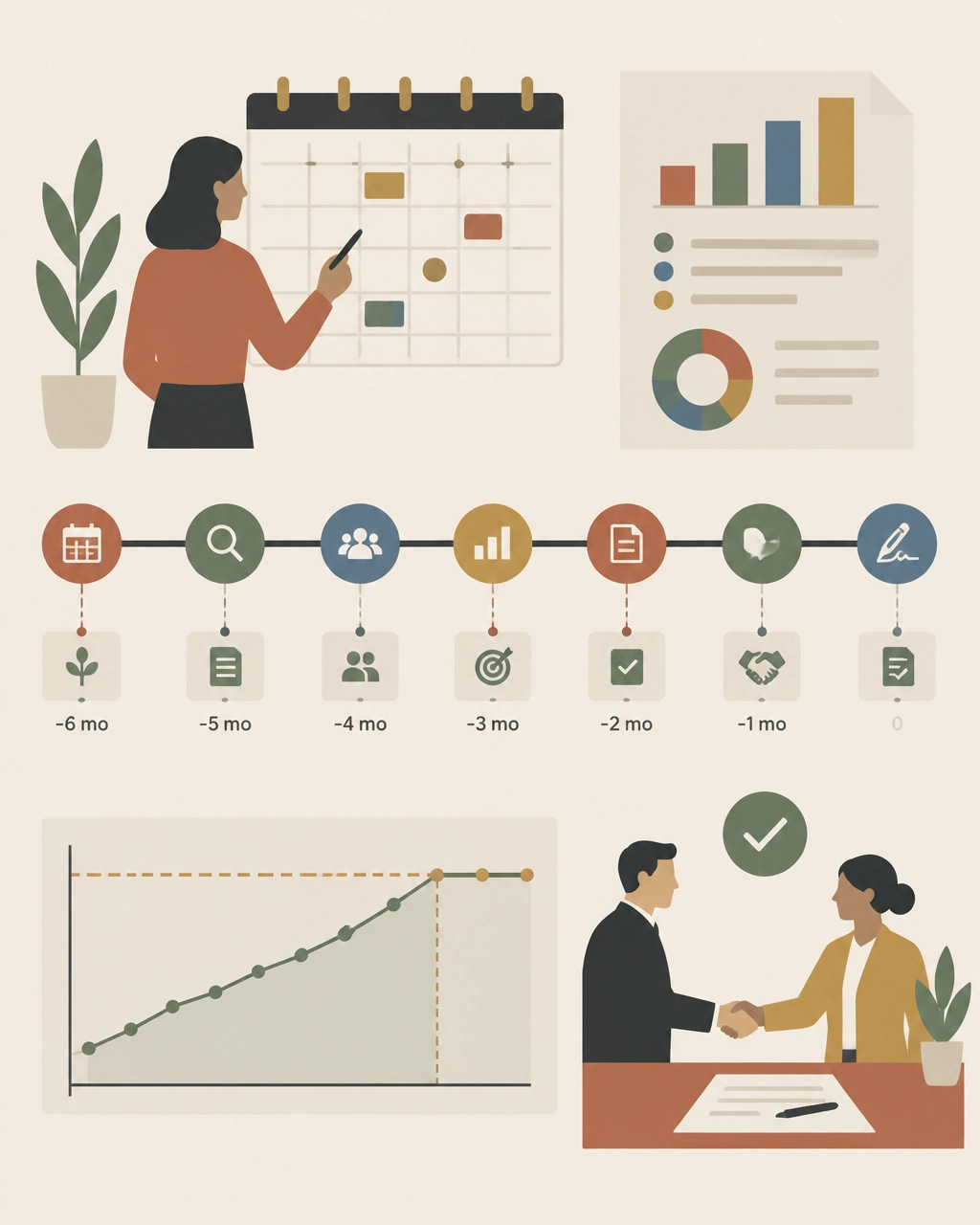
A practical timeline:
- 9–12 months out: collect contract, usage, headcount, and invoice data
- 6–9 months out: complete the benchmark and identify scope changes
- 4–6 months out: set targets, prepare alternatives, and begin formal discussions
- 2–4 months out: negotiate pricing, escalators, true-ups, and risk terms
- 30–60 days out: finalize redlines and verify the commercial model
By the time the vendor presents a renewal quote, your internal target should already be set.
What 2026 buyers should watch closely
Three issues deserve special attention in the next renewal cycle:
AI and new product add-ons
New AI capabilities may be introduced as separate paid products, premium tiers, or expanded bundles. Benchmark them independently. Do not allow “new functionality” to obscure an increase in the effective cost of your existing deployment.
Phased roadmaps
If you plan to add modules later, negotiate future pricing now. Otherwise, you may lose the consolidation economics available when multiple modules are purchased together.
Contract flexibility
Workforce volatility, M&A, and budget pressure make true-down rights and reallocation provisions more valuable than ever. The cheapest contract is not always the one with the largest initial discount. It is the one that remains financially defensible when business conditions change.
Find out whether your Workday deal is above market
You do not need to wait for Workday’s renewal proposal to discover overpayment.
The Negotiator Guru helps enterprise teams benchmark every relevant SKU, expose unused or inflated scope, review contract risk, and build a negotiation strategy before the vendor sets the anchor. Our Workday negotiation specialists operate discreetly as an extension of your team.
With Right Price Benchmarking™, we identify what your agreement should cost and where the savings opportunity exists. If the contract warrants broader support, our Full Negotiation Support team can help plan, pressure, and execute the renewal.
We have delivered $1.05 billion in total cost impact globally, with average savings of 37% per deal. And if we cannot identify at least 10% savings, we do not take the deal.
Before your next Workday renewal, benchmark the agreement you have: not the proposal you are given. Start your assessment with The Negotiator Guru.
More resources
From Fortune 500 giants to fast-growing innovators, TNG has helped clients save 20% – 40%+ on enterprise software contracts — even when they thought it was impossible

Why are Companies Hesitant to Engage Outside Consultants?
Why is it that companies are sometimes resistant to engaging with a cost savings firm like The Negotiator Guru (TNG)? Furthermore, why is it that a company refuses to engage with an advisory firm (like TNG) after they know there is a guaranteed ROI? Is there any rational reason for this or is it purely an emotional response?We at TNG find ourselves asking these questions far too often…
We know humans can be complicated (😊), but we wanted to dig deeper into what sometimes appears to be irrational behavior that negates shareholder value creation opportunities. As a result, we conducted ethnographic research on the cause of this behavior with the intent of identifying key trends, by persona. Here are a few of the key insights we discovered:
- IT Leadership (CIO, VP of IT, etc.) fears they will hurt the relationship with the software publisher/service provider leading to service degradation.
- Purchasing/Procurement/Sourcing representatives have huge egos and thrive on taking credit internally. Furthermore, they are worried about their job security if someone else can achieve a greater result.
- CFOs think they only way to achieve such savings is by changing vendors (ex: Salesforce to Microsoft) or by cutting products/services.
- Business leadership think it will take too much time to achieve the prospective savings which will negate the realized ROI.
- Executives at publicly traded companies are generally risk adverse and think it’s safer to use a big 4 consulting firm (that’s already “in the system”) even though they will likely cost more and achieve much less (since they’re a generalist vs. specialist).
We’ve heard different variations of these key objections for years. What makes us most proud is that some of this feedback came from a few of our past clientele who decided to overcome their natural resistance as they knew what was best for their organization. Per the recommendation of these past customer respondents, we've outlined what they experienced (vs. initial perceived resistance):
- Vendor Relationship – While it may be slightly uncomfortable at the beginning (depending on how much Right Sizing and/or Right Pricing opportunities TNG identifies), the vendor relationship and service quality improves at the conclusion of the TNG engagement. The vendor is engaged with the customer in a strategic manner and the customer can now feel confident they are only paying for what they need at a fair price.
- Procurement Job Security – TNG acts like a force multiplier for existing Procurement teams. As such, TNG simply seeks to enable high impact results vs. seek credit.
- Vendor/Product Change – Vendor changes are extremely rare. TNG simply identifies how internal stakeholders use the respective software platform (via their proprietary persona analysis) and identifies cost savings opportunities without sacrificing functionality/service quality.
- Time/Cost to Achieve – Internal business stakeholders are rarely involved in the process after the Discovery phase is complete.
- Niche vs. Generalist – The speed and consistency in which TNG can delivery results is a direct result of their focus and dedication focusing on their core competency, such as Salesforce.
Interestingly, our analysis identified the following key insights regarding business leaders' intention for engaging an outside advisory firm (summarized for brevity):
- IT Leadership sometimes feel uncomfortable being the “tough voice,” so they hire a 3rd party who brings the credentials to speak from an authoritative position.
- C-Suite Executives simply want to motivate (prove to) their Procurement/Business Teams that the “great deal on the table” is not so great after all.
- Procurement leadership wants to be armed with accurate price benchmarking or contract term knowledge. They recognize they can’t be experts in everything and value niche expertise from specialists vs. generalists.
- Board members want to do anything possible to reinforce their fiduciary duty to their shareholders…this includes identifying, and executing on, every available cost savings opportunity.
- Contract negotiators want to understand the software publisher’s sales playbook and internal incentive process…not just general market intelligence.
We hope that you find these key insights helpful as you contemplate and reflect on your own personal resistance to engaging an outside advisory firm. TNG prides itself to make every engagement as risk-free as possible for our clients. Furthermore, TNG will only accept a client if we know there is a major impact opportunity…if not, we will simply give you some free advice. Ready to explore joining the TNG family? Contact us today to set-up a client intake assessment where we identify your cost savings opportunity for free!

Why Salesforce Commerce Cloud Negotiations are Different
What is Commerce Cloud
The Salesforce Commerce Cloud is one of the fastest growing segments within the Salesforce ecosystem of products and services. The Commerce Cloud provides an enterprise grade e-commerce solution that which is a direct competitor to e-commerce heavyweights including, but not limited to; Shopify, Magento (Adobe), SAP, Oracle, just to name a few.
Since about 2018, Salesforce has highlighted the e-commerce cloud as a strategic growth channel for its existing customers. In other words, Salesforce has focused on deploying their “land and expand” sales strategies to deploy the e-commerce platform amongst its Sales and Service Cloud customers. There are clearly significant customer experience opportunities that can be enabled when e-commerce is connected directly to your CRM. Ironically, the TNG team is engaged by both new and existing Salesforce customers to assist with commercial negotiations related to the on-ramp and off-ramp of Commerce Cloud. Our clients seem to either love or hate the Salesforce Commerce Cloud depending on their specific use case. No matter where you land on the love/hate spectrum, it’s important to understand key negotiation opportunities/risks that are specific to the Salesforce Commerce Cloud.
History of SF Commerce Cloud
Salesforce acquired Demandware on June 1st, 2016 for $2.8 Billion USD. Some say that Salesforce was “forced” into the acquisition based on a synergistic customer portfolio (with Demandware), a lackluster homegrown solution filled with development challenges, and a competitor landscape (including Oracle, Adobe, etc.) who were making significant strides in the space.

In our opinion, Salesforce acquired Demandware primarily to purchase a pre-existing retail customer base that can be cross-sold Salesforce native functionality like Sales and Service Cloud. Salesforce had historically been lacking both North American and European retail customer penetration so this allowed an easy on-ramp. Fast forward to 2021 and Salesforce is still lagging (compared to their normal market penetration) in retail customer acquisition globally. Furthermore, we have seen many legacy Demandware customers transition away from the Salesforce Commerce Cloud and migrate over to easier-to-use platforms like Shopify. Having the e-commerce competitive landscape in mind is important when exploring/negotiation a commercial relationship with Salesforce either as a new or existing customer.
Why these negotiations are different
Salesforce typically organizes their sales team by industry, region, and product line (cloud). Their sales team incentives are consistently changing but are largely established by industry and product line. Furthermore, customer pricing is influenced based on industry, annual contract value, and customer revenue.
To be most effective at any commercial negotiation it’s important to have as much data as possible. This includes identifying the supplier’s interests and best-in-class rates on a product-by-product basis based on your unique footprint. We call this our Right Price Benchmarking service which is included as part of our Full Negotiation Service or also offered as a standalone product for those that just want the data.
Salesforce, and for that matter all e-commerce solution providers, are fully aware that switching costs from one e-commerce platform to another is an undesirable expense. They know that once they get you onto their platform that you will need to be really upset to create a reason to leave.
The fact of the matter is that plenty of customers do leave Salesforce’s Commerce Cloud for one or multiple reasons. Our research, and real client experiences, have identified one consistent trend amongst those looking to leave: Out of control run costs.
No matter whether you’re a new or existing customer to Salesforce it’s important to be as prepared as possible when engaging Salesforce. Take a look at the section below for some key insights specifically related to negotiating a Salesforce Commerce Cloud contract.
Key Insights/Tips
Now that you understand the history and key motivations related to Salesforce’s Commerce Cloud you should be able to apply the below key insights most effectively.
- Salesforce is heavily focused on capture net new retail customers. Your Salesforce sales team is heavily incentivized to find and convert customers on existing e-commerce platforms.
- If you are a current Salesforce customer and exploring the Commerce Cloud, be focused on “lift and shift” credits from Salesforce that help mitigate any change costs. Depending on your situation, you can negotiate credits to be applied immediately, over the contract term, via discounts on other products, etc.
- It’s very important you conduct a thorough assessment of your options and the overall total cost of ownership impact of your potential options. For example, a one-time credit on the Commerce Cloud license fees may produce far lass benefit to your organization than a % discount on your existing license footprint with Salesforce.
- It’s important to understand who has decision-making authority inside of Salesforce. It largely depends on what you’re asking for, the overall relationship impact, and the attractiveness of you the customer. The only way to successful navigate the Salesforce ecosystem is to hire a firm that deals with Salesforce everyday and has ex-Salesforce employees (excuse the shameful TNG plug).
- Literally 90% of current Salesforce customers that engage TNG are paying for more digital capability than they need. Those same customers are also overpaying for licenses that that they don’t even need. It’s very important you conduct a Right Sizing assessment to ensure you’re only procuring what you need.
- Specific to Commerce Cloud, this includes forecasting your Gross Merchandise Value (GMV) projections for each contract year.
- Similar to the above point, our research empirically proved that 100% of our customers (no matter new or existing Salesforce customers) have committed to higher revenue targets than needed in the interest of “getting the best deal” without TNG support;
- This creates a material risk to the Salesforce customer when they don’t hit those targets.
- Generally speaking, a longer contract term will drive a lower GMV price point;
- Even if you feel very confident in your GMV projections, focus on usage and price-point flexibility within your Commerce Cloud contract to eliminate surprises and capture cost savings if revenue actuals exceed projections.
- Note: If you are in an industry that is undergoing significant industry consolidation (M&A activity) then you should provide yourself the flexibility to acquire and/or divest mid-contract with Salesforce.
Negotiating with Salesforce is more of an art than a science. It’s important that you understand all of the facts before negotiating with Salesforce. Please feel free to contact us for some additional helpful tips as you start to explore the Salesforce Commerce Cloud. (And yes, we’re happy to help even if you’re in the 19th hour of negotiations 😊)

How Much Does a Salesforce Implementation Cost?
The Salesforce implementation phase can make or break a SaaS platform’s adoption rate and effective use for months and years to come.
Resistance to change is to be expected, but companies need their employees to go all-in on understanding the tech, establishing new processes, and eliminating workarounds and legacy behaviors.
Salesforce implementation costs vary widely depending on the size of the implementation partner (if you choose one), your total Salesforce spend, and how many custom features and processes are required. Implementation costs also vary based on whether you are migrating from an existing platform(s) or starting fresh. If you plan to implement an off-the-shelf instance with few customizations, average costs range from 10-30% of your total annual spend. On the other hand, a large company with extensive customization could pay as much as 50% of their annual spend. Integrating multiple disparate systems after a merger or acquisition can drive the price even higher.
Start with Your Salesforce Roadmap
We recommend our clients begin building out a Salesforce roadmap six to nine months before negotiations. This process helps document necessary functionality, gain buy-in from internal stakeholders, and control the direction of negotiations from the beginning.
The Salesforce roadmap can also serve as a guide during the implementation process. It represents the project’s top priorities in terms of users, functionalities, and expectations; it sets the stage for a successful rollout.
What if we are an existing company migrating to Salesforce from one or more platforms?
If you are implementing Salesforce to replace existing technology (“lift-and-shift”), the roadmap is more defined at the outset. Many processes are already in place, users have certain expectations about how their work should be done, and stakeholders know what outcomes to expect from these efforts.
A successful implementation should do more than replicate existing processes. Users should expect to adapt processes and habits to fit the new platform and achieve the desired outcomes more efficiently. (If not, why did we switch platforms at all?)
“Lift-and-shift” implementations almost always cost the most, take the longest, and have the most risks involved. Implementation partners must be experts on Salesforce and any legacy platforms.
What if we are a new company or startup with no CRM?
New companies are challenged to build a roadmap with more limited information. Depending on the age and history of the company, it can take weeks or months to really understand what it needs from a technological standpoint. Strategies fluctuate; in many startups, marketing and IT departments do not exist as standalone functions yet.
These companies must define critical needs quickly, but they have one cost-saving advantage—they can build out business processes based on existing Salesforce functionality. There are no “bad habits” to accommodate that require custom development.
Regardless of whether you are implementing Salesforce for the first time or as a replacement, there are five important ways to keep implementation costs down.
5 Steps to Reducing Salesforce Implementation Costs
1. Build your Salesforce Roadmap
Your Salesforce roadmap contains two basic pieces of information: what you plan to buy and when you plan to buy it. It is your guide for negotiating and will become your guide for implementation as well.
In many organizations, one individual serves as the Salesforce “project manager” leading this effort. This person could have any role in the organization, from Salesforce admin to CIO, but is the primary point of contact for the Salesforce rep. This does not stop the rep from reaching out to the C-Suite and VP-level leaders to build better relationships.
The roadmap helps project managers achieve the internal alignment necessary to fend off Salesforce reps who contact multiple organizational stakeholders in hopes of influencing buying decisions. It empowers the Salesforce project manager and stakeholders to present a united front regarding what to buy right now, keeping negotiations focused on costs and business value rather than product.
2. Your Introductory Rates Matter
Your initial negotiations with Salesforce will determine your rates forever. The rate you start with will be the benchmark for all future negotiations, a boon for sales reps who will jump at the chance to sell seats and modules you do not need yet.
Without a clear roadmap that identifies the types of platforms your company needs (Sales Cloud, Marketing Cloud, industry-specific clouds, etc.), the sales rep will take the opportunity to build a roadmap for you that best serves their sales and revenue objectives. To drive first-year revenue as high as possible, it will likely include many features and benefits you need, along with quite a few that you do not.
Features and benefits that are not business-critical as defined in the roadmap inflate your base price, affecting future negotiations. They will also inflate third-party implementation costs, regardless of whether you plan to use all the functionality at the time of implementation or not. Unnecessary features still take time and resources to implement, potentially deterring those resources from more important projects. Many Salesforce implementation firms bill by the hour, so every hour they spend on non-critical functionality is money wasted.
3. Avoid Buying “Shelfware”
“Shelfware” is a term that describes software or licenses a company purchases but never uses. Software becomes shelfware in several ways. Perhaps someone saw a “cool” platform at a trade show, bought it, but never adopted or used it. Some companies buy software licenses at a volume discount rather than for an actual number of users. It is an outcome of classic price psychology—if you buy one, you get one more at 50% off. If you do not need two, is the half-off price as valuable as it looks? Rarely.
Salesforce account reps know how appealing a discount is, especially when they know their points of contact must get buy-in from multiple stakeholders. As mentioned above, Salesforce reps are highly motivated to maximize first-year revenue from new clients. They may drive the conversation by offering a bundled selection of platforms at some discounted rate. There is no rhyme or reason behind these discounts. They can be invented on the spot.
New companies are especially susceptible to paying for shelfware. When business processes are still evolving and companies are still working out best practices, it might make sense to license another platform or add a few more user seats in anticipation of future growth. It is certainly easier to do so in a room with an account rep; project managers must be proactive in sticking to the roadmap and focusing on immediate, defined technological needs. Companies must be intentional and specific when negotiating quantities, types of licenses, and the associated costs to keep initial spends reasonable, weed out upselling, and avoid wasting resources implementing unnecessary technologies. At the same time, Salesforce customers should take advantage of free trials, proofs of concept, and demonstrations to explore new technologies before buying.
4. Require Clarity on Pricing Structures
Bundled pricing leads to shelfware which leads to wasted time and money. Salesforce has several tricks up its sleeve to create highly variable pricing structures across industries and company sizes. Your company’s annual revenue and annual Salesforce spend also influence pricing, but there is no way of knowing to what degree. There are no “best in class” rates; sales reps are trained to rebut these inquiries.
To avoid unnecessary costs, companies must require itemized pricing. Recently, we are seeing more and more deals that boil down to Salesforce offering X, Y, and Z for one discounted fee. This number does not necessarily represent anything; Salesforce uses a value-based pricing model where prices are set based on your perceived value of the solution.
Third-party rate data can help you better understand whether your rates are comparable to similar companies. Some Salesforce consulting firms have price calculators on their websites, but they are generally built on base rates as listed on the Salesforce website. Firms like TNG compile this data based on years of experience negotiating contracts.
5. Keep it Simple
All SaaS implementation efforts have one thing in common—customizations equal cost.
This simple fact requires stakeholders to think carefully and critically about existing business processes and expected outcomes. The more your business can align processes with Salesforce capabilities out of the box, the lower implementation costs will be.
In many cases, companies fall into the trap of extensive customization. They create technical debt; more custom features require more internal and external resources to support Customization is not necessarily a bad thing, but many small- to mid-sized organizations do not need as much custom development as they believe. A thorough business process analysis in the beginning stages can help avoid costly customizations in the future.
Stakeholders and project managers must also take into consideration the employees working with these systems daily, how changes might impact the workflow, and how human elements of change management factor in. End users must be on board with the change; stakeholders must be sure that customization requests solve a business problem rather than accommodating a user’s (or department’s) preferences.
Do I need a third-party Salesforce implementation consultant?
Organizations must decide whether they want to launch the platform themselves, add Salesforce’s implementation and customer success services to their deal, or hire a third-party consultancy. All have pros and cons.
A typical Salesforce implementation process includes business process analysis, data transfer from previous systems, custom development (if applicable), user testing and quality assurance, deployment, and ongoing user training and support. It is a heavy lift, even for large organizations.
If you choose to partner with a vendor, it is critical to find the right vendor for your needs. Large vendors may not provide small companies with the level of service or talent necessary to get the job done. While it makes sense for large companies to evaluate the big-name firms, they should prepare for higher costs with no relative increase in quality.
If you already have a consulting partner like Accenture or Deloitte working with your organization, they are strong choices for Salesforce implementation as well—they understand your business and already have strong relationships with stakeholders. Levering these existing relationships can ease the change management process.
Beyond technical proficiency, third-party firms help you manage the human element. They can help secure buy-in, speed up adoption rates and time to proficiency, and help you design workflows that optimize the use of the platform. They also optimize the use of human resources, allowing internal employees to engage with the process as needed without affecting day-to-day responsibilities.
For those who want to partner with a third party, we advocate for mid-sized implementation firms. They are large enough to provide the critical talent necessary for a successful deployment but small enough to prioritize the client-partner relationship and drive mutual success.
You can search Salesforce’s database of implementation specialists here. Brief pricing information is available below.
Conclusion
Numerous variables affect Salesforce implementation costs. At TNG, we believe companies need a clearly defined roadmap that aligns stakeholder needs and expectations before ever opening discussions with a Salesforce rep. The roadmap drives the negotiation process which ultimately drives implementation costs and time frames.
Start with a CIA.
That’s a Client Intake Assessment.
Upload your contract data or schedule a discovery call. If we can’t identify at least a 10%+ from a TNG Right Pricing™ opportunity, we won’t take your money (but we will offer you some free advice!)
