

Workday Benchmark: How to Know If You're Overpaying Before Your Next Renewal (2026 Data)


Workday renewals rarely become expensive because of one obviously unreasonable line item. Overpayment usually accumulates through a combination of inflated headcount assumptions, unused modules, unclear discount structures, automatic escalators, and contract terms that remove flexibility.
That makes one question critical before your next renewal:
Is your Workday agreement priced within a defensible market range: or are you paying a premium because the vendor set the anchor first?
A credible Workday benchmark can answer that question. But benchmarking is not simply comparing your total annual contract value with a number found online. You need to normalize the data, examine your licensing structure, and connect pricing to the terms that determine your future cost.
This guide explains how to diagnose overpayment using 2026 benchmark data, what to measure, and where negotiation leverage is most likely to exist.
Workday does not publish a universal price list. The ranges below are directional benchmarks from independent market research and reported enterprise transactions. Your appropriate target depends on employee count, modules, geography, deployment scope, term, and contract structure.
What a Workday benchmark should measure
A useful benchmark should answer more than “What discount did we receive?”
It should measure your effective cost across several dimensions:
This matters because a large discount can still produce a poor deal. For example, a 40% discount paired with a 5% annual escalator, fixed headcount commitments, and unused modules may cost more over three years than a smaller discount with better protections.
The right question is not “How much did Workday discount the proposal?”
It is:
What will we pay for the functionality we actually use, over the full term, under realistic workforce conditions?
The 5 diagnostic checks that reveal overpayment
1. Calculate your effective unit price
Start with the simplest calculation:
Effective PEPY = Annual module cost ÷ contracted employee count
For named-user products:
Effective annual user price = Annual module cost ÷ contracted named users
Do this separately for each major component rather than dividing total ACV by total employees. A blended number can hide expensive modules inside a bundle.
One 2026 benchmark set reports the following enterprise-level directional ranges:
Workday componentIndicative enterprise benchmarkCore HCM$14–$22 per employee per yearPayroll$11–$18 per employee per yearRecruiting$7–$12 per employee per yearTalent Management$6–$10 per employee per yearLearning$4–$8 per employee per yearFinancial Management$8–$14 per employee per yearAdaptive Planning$1,400–$2,200 per finance user per year
These figures come from published 2026 renewal research by WorkdayNegotiations. Other market studies report higher delivered pricing when they measure broader bundles, monthly rates, implementation scope, or more complex enterprise footprints.
That difference is not a contradiction. It demonstrates why benchmark comparisons must be like-for-like.
If your effective rate sits materially above the appropriate range after accounting for scope and complexity, you may have a pricing gap worth pursuing.
2. Separate deployed functionality from purchased functionality
Workday bundles can make unused functionality difficult to see. Review each module against four categories:
Pay particular attention to products bought against future plans. A module that was “planned for phase two” three years ago may still be generating subscription cost without delivering value.
This is especially important for planning products and workflow-based packages. Recent Workday pricing research from Redress Compliance found that customers without documented model and workflow counts can overpay materially because the vendor’s estimate becomes the default sizing assumption.
Before renewal, ask:

3. Challenge the headcount forecast
Workday pricing is often tied to employee or worker populations. That creates a major risk: paying today for growth that may not occur.
Your renewal analysis should distinguish between:
Then compare your contracted count with actual historical averages and your approved workforce plan.
If you are close to a volume breakpoint, the answer may not be to accept Workday’s proposed band. You may be able to negotiate favorable pricing based on a documented forecast: or negotiate a more flexible true-up structure that adjusts in both directions.
An upward-only true-up means Workday benefits when your workforce grows, while you continue paying for capacity when it shrinks. A stronger position includes:
4. Audit the escalator, not just the discount
The annual escalator is one of the most overlooked sources of renewal overpayment.
Published 2026 research indicates that Workday proposals may open with annual increases in the 3%–7% range, while benchmark-informed buyers often target a cap between 0% and 3%, depending on leverage and deal structure. Another independent SaaS benchmark found that Workday increases can reach 10%–16% without effective benchmarking, compared with approximately 0%–5% when customers negotiate from market data.
The exact outcome will vary. The principle does not:
A discount is a one-time reduction. An escalator compounds.
Review whether the cap applies to:
The strongest language is an all-in cap that prevents Workday from applying the limit only to one portion of the agreement while increasing other charges outside the cap.
This is where a Contract Risk Review can expose cost increases that are not obvious from the order form.
5. Compare your term against your flexibility needs
A longer term can create pricing leverage, but it can also lock in overpayment.
Some 2026 benchmark data reports additional discounts for three-, five-, and longer-term commitments. That may be attractive if Workday is deeply embedded in your operating model and your workforce is stable.
But a longer term is dangerous when:
Do not trade flexibility for a headline discount without modeling the total cost under multiple scenarios.
How to build a defensible 2026 Workday benchmark
A credible benchmark has four stages.
Stage 1: Normalize the commercial data
Collect the current agreement, order forms, amendments, invoices, usage data, employee counts, and renewal proposal.
Normalize:
Stage 2: Benchmark at the SKU and module level
Compare each component against relevant market data: not just the total contract value.
The Right Price Benchmarking™ service from The Negotiator Guru triangulates pricing using factors such as industry, annual contract value, company revenue, and license footprint. That produces a more useful view than a generic “average Workday customer” number.
Stage 3: Model the full-term cost
Create at least three scenarios:
Model the impact over the full term, including escalators and true-up mechanics. A $500,000 annual improvement is not the same as a $500,000 one-time credit if the recurring baseline remains inflated.

Stage 4: Translate the data into negotiation asks
Benchmark data is valuable only when it changes your position.
Your asks may include:
Use the data internally to set targets, reservation points, and walk-away conditions. In the negotiation, lead with specific commercial requests rather than handing over a generic benchmark report.
When to start planning for a Workday renewal
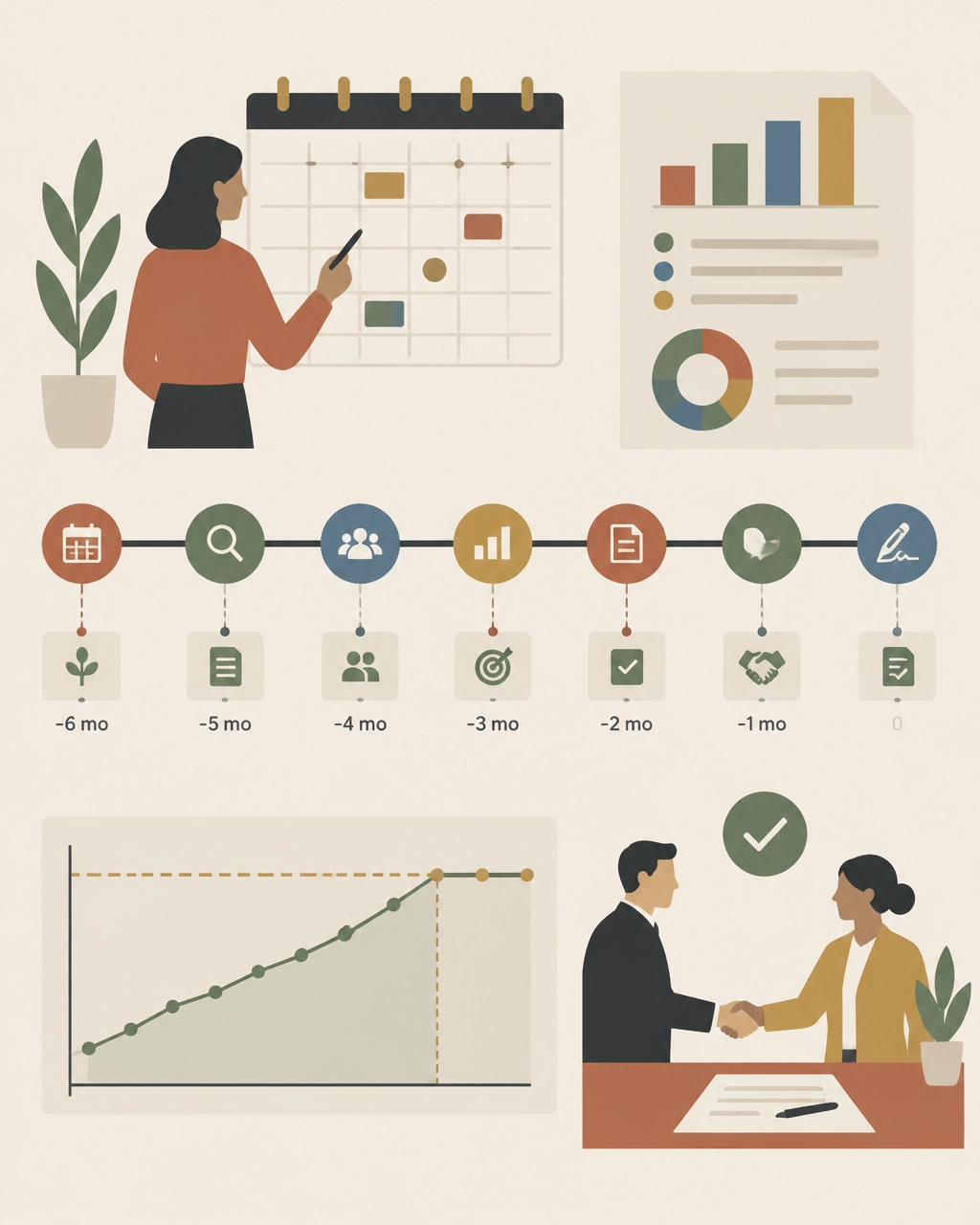
Begin at least six months before renewal. Earlier is better when the agreement is complex or the annual spend is significant.
A practical timeline:
By the time the vendor presents a renewal quote, your internal target should already be set.
What 2026 buyers should watch closely
Three issues deserve special attention in the next renewal cycle:
AI and new product add-ons
New AI capabilities may be introduced as separate paid products, premium tiers, or expanded bundles. Benchmark them independently. Do not allow “new functionality” to obscure an increase in the effective cost of your existing deployment.
Phased roadmaps
If you plan to add modules later, negotiate future pricing now. Otherwise, you may lose the consolidation economics available when multiple modules are purchased together.
Contract flexibility
Workforce volatility, M&A, and budget pressure make true-down rights and reallocation provisions more valuable than ever. The cheapest contract is not always the one with the largest initial discount. It is the one that remains financially defensible when business conditions change.
Find out whether your Workday deal is above market
You do not need to wait for Workday’s renewal proposal to discover overpayment.
The Negotiator Guru helps enterprise teams benchmark every relevant SKU, expose unused or inflated scope, review contract risk, and build a negotiation strategy before the vendor sets the anchor. Our Workday negotiation specialists operate discreetly as an extension of your team.
With Right Price Benchmarking™, we identify what your agreement should cost and where the savings opportunity exists. If the contract warrants broader support, our Full Negotiation Support team can help plan, pressure, and execute the renewal.
We have delivered $1.05 billion in total cost impact globally, with average savings of 37% per deal. And if we cannot identify at least 10% savings, we do not take the deal.
Before your next Workday renewal, benchmark the agreement you have: not the proposal you are given. Start your assessment with The Negotiator Guru.
More resources
From Fortune 500 giants to fast-growing innovators, TNG has helped clients save 20% – 40%+ on enterprise software contracts — even when they thought it was impossible

How Much Does a Salesforce Implementation Cost?
The Salesforce implementation phase can make or break a SaaS platform’s adoption rate and effective use for months and years to come.
Resistance to change is to be expected, but companies need their employees to go all-in on understanding the tech, establishing new processes, and eliminating workarounds and legacy behaviors.
Salesforce implementation costs vary widely depending on the size of the implementation partner (if you choose one), your total Salesforce spend, and how many custom features and processes are required. Implementation costs also vary based on whether you are migrating from an existing platform(s) or starting fresh. If you plan to implement an off-the-shelf instance with few customizations, average costs range from 10-30% of your total annual spend. On the other hand, a large company with extensive customization could pay as much as 50% of their annual spend. Integrating multiple disparate systems after a merger or acquisition can drive the price even higher.
Start with Your Salesforce Roadmap
We recommend our clients begin building out a Salesforce roadmap six to nine months before negotiations. This process helps document necessary functionality, gain buy-in from internal stakeholders, and control the direction of negotiations from the beginning.
The Salesforce roadmap can also serve as a guide during the implementation process. It represents the project’s top priorities in terms of users, functionalities, and expectations; it sets the stage for a successful rollout.
What if we are an existing company migrating to Salesforce from one or more platforms?
If you are implementing Salesforce to replace existing technology (“lift-and-shift”), the roadmap is more defined at the outset. Many processes are already in place, users have certain expectations about how their work should be done, and stakeholders know what outcomes to expect from these efforts.
A successful implementation should do more than replicate existing processes. Users should expect to adapt processes and habits to fit the new platform and achieve the desired outcomes more efficiently. (If not, why did we switch platforms at all?)
“Lift-and-shift” implementations almost always cost the most, take the longest, and have the most risks involved. Implementation partners must be experts on Salesforce and any legacy platforms.
What if we are a new company or startup with no CRM?
New companies are challenged to build a roadmap with more limited information. Depending on the age and history of the company, it can take weeks or months to really understand what it needs from a technological standpoint. Strategies fluctuate; in many startups, marketing and IT departments do not exist as standalone functions yet.
These companies must define critical needs quickly, but they have one cost-saving advantage—they can build out business processes based on existing Salesforce functionality. There are no “bad habits” to accommodate that require custom development.
Regardless of whether you are implementing Salesforce for the first time or as a replacement, there are five important ways to keep implementation costs down.
5 Steps to Reducing Salesforce Implementation Costs
1. Build your Salesforce Roadmap
Your Salesforce roadmap contains two basic pieces of information: what you plan to buy and when you plan to buy it. It is your guide for negotiating and will become your guide for implementation as well.
In many organizations, one individual serves as the Salesforce “project manager” leading this effort. This person could have any role in the organization, from Salesforce admin to CIO, but is the primary point of contact for the Salesforce rep. This does not stop the rep from reaching out to the C-Suite and VP-level leaders to build better relationships.
The roadmap helps project managers achieve the internal alignment necessary to fend off Salesforce reps who contact multiple organizational stakeholders in hopes of influencing buying decisions. It empowers the Salesforce project manager and stakeholders to present a united front regarding what to buy right now, keeping negotiations focused on costs and business value rather than product.
2. Your Introductory Rates Matter
Your initial negotiations with Salesforce will determine your rates forever. The rate you start with will be the benchmark for all future negotiations, a boon for sales reps who will jump at the chance to sell seats and modules you do not need yet.
Without a clear roadmap that identifies the types of platforms your company needs (Sales Cloud, Marketing Cloud, industry-specific clouds, etc.), the sales rep will take the opportunity to build a roadmap for you that best serves their sales and revenue objectives. To drive first-year revenue as high as possible, it will likely include many features and benefits you need, along with quite a few that you do not.
Features and benefits that are not business-critical as defined in the roadmap inflate your base price, affecting future negotiations. They will also inflate third-party implementation costs, regardless of whether you plan to use all the functionality at the time of implementation or not. Unnecessary features still take time and resources to implement, potentially deterring those resources from more important projects. Many Salesforce implementation firms bill by the hour, so every hour they spend on non-critical functionality is money wasted.
3. Avoid Buying “Shelfware”
“Shelfware” is a term that describes software or licenses a company purchases but never uses. Software becomes shelfware in several ways. Perhaps someone saw a “cool” platform at a trade show, bought it, but never adopted or used it. Some companies buy software licenses at a volume discount rather than for an actual number of users. It is an outcome of classic price psychology—if you buy one, you get one more at 50% off. If you do not need two, is the half-off price as valuable as it looks? Rarely.
Salesforce account reps know how appealing a discount is, especially when they know their points of contact must get buy-in from multiple stakeholders. As mentioned above, Salesforce reps are highly motivated to maximize first-year revenue from new clients. They may drive the conversation by offering a bundled selection of platforms at some discounted rate. There is no rhyme or reason behind these discounts. They can be invented on the spot.
New companies are especially susceptible to paying for shelfware. When business processes are still evolving and companies are still working out best practices, it might make sense to license another platform or add a few more user seats in anticipation of future growth. It is certainly easier to do so in a room with an account rep; project managers must be proactive in sticking to the roadmap and focusing on immediate, defined technological needs. Companies must be intentional and specific when negotiating quantities, types of licenses, and the associated costs to keep initial spends reasonable, weed out upselling, and avoid wasting resources implementing unnecessary technologies. At the same time, Salesforce customers should take advantage of free trials, proofs of concept, and demonstrations to explore new technologies before buying.
4. Require Clarity on Pricing Structures
Bundled pricing leads to shelfware which leads to wasted time and money. Salesforce has several tricks up its sleeve to create highly variable pricing structures across industries and company sizes. Your company’s annual revenue and annual Salesforce spend also influence pricing, but there is no way of knowing to what degree. There are no “best in class” rates; sales reps are trained to rebut these inquiries.
To avoid unnecessary costs, companies must require itemized pricing. Recently, we are seeing more and more deals that boil down to Salesforce offering X, Y, and Z for one discounted fee. This number does not necessarily represent anything; Salesforce uses a value-based pricing model where prices are set based on your perceived value of the solution.
Third-party rate data can help you better understand whether your rates are comparable to similar companies. Some Salesforce consulting firms have price calculators on their websites, but they are generally built on base rates as listed on the Salesforce website. Firms like TNG compile this data based on years of experience negotiating contracts.
5. Keep it Simple
All SaaS implementation efforts have one thing in common—customizations equal cost.
This simple fact requires stakeholders to think carefully and critically about existing business processes and expected outcomes. The more your business can align processes with Salesforce capabilities out of the box, the lower implementation costs will be.
In many cases, companies fall into the trap of extensive customization. They create technical debt; more custom features require more internal and external resources to support Customization is not necessarily a bad thing, but many small- to mid-sized organizations do not need as much custom development as they believe. A thorough business process analysis in the beginning stages can help avoid costly customizations in the future.
Stakeholders and project managers must also take into consideration the employees working with these systems daily, how changes might impact the workflow, and how human elements of change management factor in. End users must be on board with the change; stakeholders must be sure that customization requests solve a business problem rather than accommodating a user’s (or department’s) preferences.
Do I need a third-party Salesforce implementation consultant?
Organizations must decide whether they want to launch the platform themselves, add Salesforce’s implementation and customer success services to their deal, or hire a third-party consultancy. All have pros and cons.
A typical Salesforce implementation process includes business process analysis, data transfer from previous systems, custom development (if applicable), user testing and quality assurance, deployment, and ongoing user training and support. It is a heavy lift, even for large organizations.
If you choose to partner with a vendor, it is critical to find the right vendor for your needs. Large vendors may not provide small companies with the level of service or talent necessary to get the job done. While it makes sense for large companies to evaluate the big-name firms, they should prepare for higher costs with no relative increase in quality.
If you already have a consulting partner like Accenture or Deloitte working with your organization, they are strong choices for Salesforce implementation as well—they understand your business and already have strong relationships with stakeholders. Levering these existing relationships can ease the change management process.
Beyond technical proficiency, third-party firms help you manage the human element. They can help secure buy-in, speed up adoption rates and time to proficiency, and help you design workflows that optimize the use of the platform. They also optimize the use of human resources, allowing internal employees to engage with the process as needed without affecting day-to-day responsibilities.
For those who want to partner with a third party, we advocate for mid-sized implementation firms. They are large enough to provide the critical talent necessary for a successful deployment but small enough to prioritize the client-partner relationship and drive mutual success.
You can search Salesforce’s database of implementation specialists here. Brief pricing information is available below.
Conclusion
Numerous variables affect Salesforce implementation costs. At TNG, we believe companies need a clearly defined roadmap that aligns stakeholder needs and expectations before ever opening discussions with a Salesforce rep. The roadmap drives the negotiation process which ultimately drives implementation costs and time frames.

Negotiating with Salesforce - Seven things you need to know about how Salesforce looks at a deal
Salesforce is good at negotiating. So your chances of getting a good deal are enhanced by understanding how they look at a deal and their goals. Your Salesforce Account Executive will lead the team you are negotiating with, in close coordination with his or her manager. This team is your path to getting the best overall deal. And while they are trained to maximize Salesforce revenue, they won’t get paid unless you make a purchase. So if you ask the right questions, and provide information that can help them get to a discount level you are comfortable with, this is the win-win situation all are striving for.
The remainder of this article provides some guidelines and background that will help you to get there.
1. Salesforce sales teams earn commissions on incremental revenue
Account Executives (also called “reps”) and their management are paid based on incremental revenue, not total revenue. If you don't buy additional licenses (or spend additional money), they don't earn commissions. More specifically, if your total spend this year is not more than last year’s, they don’t earn commissions this year. They are indifferent to whether you purchase licenses for more users, add-ons licenses for existing users, or you swap out one type of license for another, as long as the total spend is more. This is actually a good thing for the customer because it gives you more leverage and allows you to adjust your purchasing to your needs.
2. Salesforce AE’s are paid when the deal is signed
SF reps and management are paid in advance for the 12-month value of whatever you are deploying now. While they will ask for a longer contract such as three or five years, they are open to a shorter term, since most, if not all of their commissions are based on first-year revenue only. This varies from year to year, but the first year is always more important.
3. Timing matters
Salesforce's fiscal year ends in January. While this may seem strange, it is actually quite intentional. They can work with a customer the entire year to justify a new purchase, and wait until that customer's new fiscal year starts in January when the budget becomes available. And since the sales team gets paid on an annual quota they are quite happy with January deals. This often leads to very large February commission checks!
But it's not only the end of the year that matters, as management and reps are often encouraged through bonus payments to close deals at the end of a quarter.
Customers can take advantage of this quarter and year-end effect by asking for and often getting discounts that would otherwise not be available.
4. Discount authority is distributed
There are many articles in the public realm indicating that the rep has no power, and all of the decision-making lies with a special team that has the authority. This is not quite correct. Your rep has access to a discount/approval matrix indicating what level of discount is available, by license and quantity, and what organizational level is needed to approve it. They know how much of a discount they can get approval for, and whom they need to get that approval from.
In general, each level of management has a specific level of discount they can approve. So for example, for a given size deal, your rep may be able to offer you a 10% discount without additional approval. His manager may be able to approve an additional 5%, and each level of management above can offer some additional discounting. The special approvals team is involved only when a deal requires additional discounting, beyond what a given size of deal and management level can approve. A good rep knows how to work this structure, and will do so to get you the best deal they believe they need to have to get your signature.
So while the rep doesn't necessarily have the authority to grant you the discount you might want, they are your advocate and absolutely control the path to get you a better deal. So keep pushing and asking for more - as you get closer to year-end or quarter-end, more of the management will be interested in helping your rep get you a bigger discount. And it is highly likely that your rep’s manager (Salesforce calls the first-line sales manager a “Regional Vice President”, or “RVP”) is fully knowledgeable about every deal, so going above the rep does not necessarily get you better discounts.
5. Discounts depend on both deal size and customer size
Larger deals and larger customers generally get larger discounts. The combination of order size and customer spend leads to the discount they might offer you for a particular purchase. For example, a $100k purchase from a customer spending $2M annually will likely get a larger discount than that same $100k purchase from a customer spending $500k annually.
Conversely, a $2M customer making a $10k purchase may get a larger discount than a $100K purchase made by a new customer.
While deal size determines the discount level, customer size determines where the discount level for the deal starts.
6. Consolidating purchases increase your discount
Salesforce loves it when you make lots of little purchases. Each one is considered as if it were the only purchase you are making, and thus separate individual purchases lead to higher overall spend (see #5). When you are about to make a purchase, be sure to consider if any other groups in your organization are doing the same, as well as purchases you might be making in the short term future. If you can consolidate the orders into a single request, your deal size goes up, and your discount level will likely improve.
7. Consider near term future demand in your current purchase
As an extension to the previous point to consolidate your purchases, this can be extended to include purchases that will likely be made in the next few months or even the next year. Providing this to the account team will allow them to provide several options to you, and you will be able to see larger discount levels that might be available to you. This will likely include making the full year’s purchase upfront, which will lower your cost per license, but potentially increase your short-term spend.
The downside of advancing purchases before you need them is that there will be licenses that are unused for part of the contract term. You can then compare which is better for you, both in the short term and the long term, since your renewals will start from a lower price per user. You may find that even though some licenses are unused for a time, your overall cost is lower, especially when you consider the cost of several years in the future. Most good account teams will be able to provide you sufficiently better deals to make this worthwhile for you to make the purchase up front. And since you have already paid for the licenses, the faster you can deploy them, the more you will benefit, without incurring additional costs.
Bonus - Not all licenses need to be activated concurrently
Let's say you are planning on deploying 900 licenses in the next 12 months, with a schedule of 300 in month 1, 300 in month 4, and 300 in month 7.
You will almost always get a better price if you purchase all 900 at once, rather than 3 purchases of 300, but you will end up with licenses that you are paying for and not using for some of this time. Conversely, if you make three purchases, you are not paying for anything prior to actually deploying them, but the cost per license will be higher.
A better option is often available that combines the best of both. You can agree to purchase the 900 licenses in a single order but delay the activation dates for the licenses you will not be activating in the next few months. Your order form will have three line items, one for each activation date. But since your discount will be based on the full 900 license purchase, they will all be less expensive, and you are not paying prior to when you need them! Salesforce calls this a “staggered deal” structure.
Ready to explore joining the TNG family? Contact us today to set-up a client intake assessment where we identify your cost savings opportunity for free!

Guide to Salesforce Pricing: How Much should Salesforce Cost in 2021?
Yes, you can negotiate your contract with Salesforce.
Much like other large IT and SaaS vendors, Salesforce expects you to negotiate. Most customers do not know they can negotiate IT contracts or are hesitant to do so out of fear of compromising the business relationship. Some customers do attempt to negotiate but are largely unsuccessful because they do not know how to navigate the complicated process.
It is possible to achieve a margin of reduction anywhere from 15% to 50% in your Salesforce contracts. In our experience, the most successful negotiations focus on mutual value rather than a lower price.
Salesforce, by design, has developed its sales organization so that the customer-facing account representatives do not fully understand where rates should be per client. These individuals are the clients’ day-to-day contacts and have some local knowledge from their book of business, but they do not always have the full picture.
The sales system runs through a “business desk” or “deal desk.” The business desk is Salesforce’s decision-maker, with the account representative serving as something of a middle-man on your behalf. Read more about the business desk system.
How does Salesforce determine pricing?
First, it is important to clear up misconceptions about seasonal pricing. Many of our clients have been conditioned to believe that you must negotiate with software vendors at the end of the vendor’s fiscal year. They are operating under the assumption that the vendor is hustling to meet its annual or quarterly sales goals and is highly motivated to offer deals. This is an expensive and erroneous assumption. Salesforce, for example, has monthly targets as well; they change depending on how well certain sales verticals are performing and which products are selling.
In general, Salesforce pricing is consistent with most SaaS organizations in that the more volume you have, the lower your price will be. However, there is no standard pricing for Salesforce. There is no “best in class” rate across industries; if another company is paying less than you, that means nothing at face value. In fact, sales teams at Salesforce are trained to rebut those concerns.
In addition to the number of users, Salesforce pricing varies wildly based on three primary variables: industry, annual contract value (the amount of money you pay to Salesforce each year), and the customer’s (your) annual revenue.
Other factors that can lead to additional fees is the number of custom objects, permissions, profiles, developer support, integrations with Outlook or Gmail, dashboard creation, customizable reports, custom objects, external apps, lead scoring, and other additional features.
Consider this example: Two companies, one in manufacturing and one in life sciences, have roughly the same annual revenue and roughly the same annual contract value. The main differentiator is the industry; this could mean price points vary as much as 30% to 40%. Why? Salesforce operates using a type of value-based pricing model, where prices are set based on a customer’s perceived value of the solution. Industries like manufacturing and consumer goods with relatively small profit margins tend to see lower Salesforce costs. It is unlikely an individual sales rep would see this, being siloed into his or her own industry vertical.
What are Salesforce’s prices?
For the most part, Salesforce products are priced on a per user/per month or per digital capability /per month basis, billed annually. Customers who need additional Sandboxes, Shield, Platform Encryption, etc. will also experience variable pricing which is calculated on a percentage basis against a set of core SF products (like Sales/Service Cloud licenses). Salesforce calls this “derived pricing” and, contrary to what your account team will tell you, it’s highly negotiable as it delivers a high commission incentive. Publicly, Salesforce will tell you these products are 30% of net contract value. The “should cost” percentage of these derived products are reliant on the 3 variables described above with a specific emphasis on your product mix and annual contract value with Salesforce.
Below you will find the “list pricing” for Salesforce. On average, through proper negotiation you can save 15-75% off of these list prices.
Salesforce CRM Pricing (See also: add-ons)
Work.com
- Workplace Command Center: $5/user/month. Manage the complex process of opening your business and getting employees back to work safely in the COVID-19 environment
- Emergency Response Management for Public Sector: $300/user/month. Prioritize and mobilize emergency resources
- Emergency Response Management for Public Health: $450/user/month. Protect communities and provide personalized patient care at scale
- Contact Tracing: $200/user/month. Protect your employees and customers from the risk of infection
Small Business Solutions
- Essentials: $25/user/month. All-in-one sales and support app
- Sales/Service Professional: $75/user/month. Complete sales/service solution for any size team
- Pardot Growth: $1,250/org/month. Suite of marketing automation tools for any size team
Salesforce Sales Cloud Pricing
- Salesforce Essentials: $25/user/month billed annually. All-in-one sales and support app
- Lightning Professional Edition: $75/user/month. Complete CRM for any team size
- Lightning Enterprise: $150/user/month. Deeply customizable sales CRM
- Lightning Unlimited: $300/user/month. Unlimited CRM power and support
Salesforce Service Cloud Pricing
- Essentials Edition: $25/user/month billed annually. All-in-one sales and support app
- Professional: $75/user/month. Complete service CRM for any team size
- Enterprise: $150/user/month. Customizable CRM for comprehensive service
- Unlimited: $300/user/month. Unlimited CRM power
Marketing Cloud
- Customer 360 Audiences
- Corporate: $12,500/org/month. Give mid-sized businesses tools to unify and grow data assets
- Enterprise: $50,000/org/month. Help large-scale organizations unify, segment, and activate all data
- Enterprise Plus: $65,000/org/month. Enterprise edition plus Premier Support
- Loyalty Management
- B2B: $30,000/org/month. Incentivize channel partners and distributors with a B2B loyalty program
- B2C: $35,000/org/month. Launch and manage more dynamic and personalized B2C loyalty experiences
- B2C Loyalty Plus: $45,000/org/month. Run multiple loyalty programs on a single platform
- Pardot (up to 10,000 contacts)
- Growth: $1,250/org/month. Fuel growth with marketing automation
- Plus: $2,500/org/month. Dive deeper with marketing automation and analytics
- Advanced: $4,000/org/month. Power innovation with advanced marketing automation and analytics
- Premium: $15,000/org/month. Enterprise-ready features with predictive analytics and support
Email, Mobile, Web Marketing
- Basic: $400+/org/month. Personalized promotional email marketing
- Pro: $1,250+/org/month. Personalized marketing automation with email solutions
- Corporate: $3,750+/org/month. Personalized cross-channel strategic marketing solutions
- Enterprise: Ask for a quote. Sophisticated journeys across channels, brands, and geographies
Social Studio
- Basic: $1,000/org/month. Start your social media marketing journey with listening and engagement
- Pro: $4,000/org/month. Listen, publish, and engage across social networks
- Corporate: $12,000/org/month. Social marketing and social customer service for companies with multiple brands or products
- Enterprise: $40,000/org/month. Maximize results at scale across teams, brands, and geographies
Advertising Studio
- Professional: $2,000+/mo. Power audiences across digital advertising with CRM
Datorama
- Starter: $3,000+/org/month. Begin your marketing intelligence journey and unify, visualize, and activate your marketing data
- Growth: $10,000+/org/month. Grow your marketing intelligence platform across all campaigns, channels, and platforms
- Plus: Ask for a quote. Complete marketing intelligence across regions, brands, and business units
Google Marketing Platform
- Google Analytics 360: $12,500+/org/month. Turn insights into action with Google Analytics 360
- Google Analytics 360 + Optimize 360: $17,500+/month. Test, adapt, and personalize with Optimize 360
Salesforce CMS: $10,000/org/month. Build connected content and digital experiences at scale
Commerce Cloud
- B2B Commerce: Quote request
- B2C Commerce: Quote request
Platform
- Starter: $25/user/month. Build custom apps that fuel sales, service, and marketing productivity
- Platform Plus: $100/user/month. Extend Salesforce to every employee, every department, and transform app dev for your entire organization
How much does a Salesforce implementation cost?
A Salesforce implementation will cost on average 10-30% of your annual spend with Salesforce for a standard implementation. The primary factors that will cause the cost of your Salesforce implementation fees to vary is the amount of custom integrations, configuration services, and custom objects required by your organization.
To learn more read our article about How much does a Salesforce implementation cost?
How do we get a Salesforce discount?
Discounts through organizational growth:
Organizational growth is the greatest leverage a company can have when negotiating discounts. Whether a company grows organically by adding more employees or capabilities, or inorganically through mergers or acquisitions, the need for more user licenses is an excellent starting point for negotiations. When company growth leads to both new users and new products, the opportunity for more extensive discounts increases.
Discounts through product expansion:
Companies that do not have planned organic or inorganic growth can build leverage by opting for some new or trending products.
If you are just purchasing a basic CRM platform for lead, contact, & opportunity management, then you will likely struggle to receive a large discount. Although Salesforce routinely offers discounts on cross-industry platforms such as Einstein for analytics. It is discounted because it has not been widely adopted and few implementations have been successful. When Salesforce is actively pushing Einstein or another specific product, there are massive sales incentives and greater discounts. These discounts can be leveraged to negotiate further discounts in core licenses.
While Einstein is promoted across industries regularly, other industry-specific platforms may be incentivized at different times of the year. Without inside knowledge, it is impossible to predict or know what products will be incentivized at what time. Because we work with Salesforce constantly, The Negotiator Guru has a much clearer picture of the Salesforce landscape. Our active client engagements and professional relationships with former Salesforce employees allow us to work on your behalf to move through the negotiation process.
How do we manage Salesforce cost over time?
Once you have successfully worked with TNG to negotiate your first contract, what happens when renewal time comes around? Clear, established ownership of Salesforce within an organization plays a critical role in managing costs moving forward.
Salesforce’s ideal customer is one with multiple business units where needs and goals are not aligned across functions. No one is leveraging spend or standardizing rates/terms. Salesforce sales reps plan for an annual 10% increase in revenue from every customer, so customers should expect to be presented with the latest and greatest tool or app when sales conversations begin. When each business unit works independently with Salesforce, it is far more likely a company will pay for more software than it needs.
TNG recommends a centralized authority that manages the overall relationship with Salesforce but particularly the tactical management of licenses. An internal Center of Excellence that can manage the entire Salesforce instance from an enterprise perspective, move licenses around as necessary, ensure products are being used appropriately, and continue refining and adjusting the Salesforce roadmap along the way.
Conclusion
Our negotiation process is driven by a simple concept: right size, right price. Similar clients should pay the same price for the same product, know what rates they should be paying in comparison to their peers, and know what to look for in software contracts to eliminate potential issues before they arise. Salesforce has hidden much of this process in the shadows, making it challenging for companies to make informed investments in technologies.
Start with a CIA.
That’s a Client Intake Assessment.
Upload your contract data or schedule a discovery call. If we can’t identify at least a 10%+ from a TNG Right Pricing™ opportunity, we won’t take your money (but we will offer you some free advice!)
