

Workday Benchmark: How to Know If You're Overpaying Before Your Next Renewal (2026 Data)


Workday renewals rarely become expensive because of one obviously unreasonable line item. Overpayment usually accumulates through a combination of inflated headcount assumptions, unused modules, unclear discount structures, automatic escalators, and contract terms that remove flexibility.
That makes one question critical before your next renewal:
Is your Workday agreement priced within a defensible market range: or are you paying a premium because the vendor set the anchor first?
A credible Workday benchmark can answer that question. But benchmarking is not simply comparing your total annual contract value with a number found online. You need to normalize the data, examine your licensing structure, and connect pricing to the terms that determine your future cost.
This guide explains how to diagnose overpayment using 2026 benchmark data, what to measure, and where negotiation leverage is most likely to exist.
Important: Workday does not publish a universal price list. The ranges below are directional benchmarks from independent market research and reported enterprise transactions. Your appropriate target depends on employee count, modules, geography, deployment scope, term, and contract structure.
What a Workday benchmark should measure
A useful benchmark should answer more than “What discount did we receive?”
It should measure your effective cost across several dimensions:
- Per employee per year (PEPY) for workforce-based products
- Per user per month or year for named-user products
- Annual contract value (ACV) by module
- Discount from the relevant commercial baseline
- Annual price escalator
- Headcount commitments and true-up rules
- Unused or underused modules
- Flexibility to reduce, add, or reallocate licenses
- Fees outside the headline subscription price
This matters because a large discount can still produce a poor deal. For example, a 40% discount paired with a 5% annual escalator, fixed headcount commitments, and unused modules may cost more over three years than a smaller discount with better protections.
The right question is not “How much did Workday discount the proposal?”
It is:
What will we pay for the functionality we actually use, over the full term, under realistic workforce conditions?
The 5 diagnostic checks that reveal overpayment
1. Calculate your effective unit price
Start with the simplest calculation:
Effective PEPY = Annual module cost ÷ contracted employee count
For named-user products:
Effective annual user price = Annual module cost ÷ contracted named users
Do this separately for each major component rather than dividing total ACV by total employees. A blended number can hide expensive modules inside a bundle.
One 2026 benchmark set reports the following enterprise-level directional ranges:
| Workday component | Indicative enterprise benchmark |
|---|---|
| Core HCM | $14–$22 per employee per year |
| Payroll | $11–$18 per employee per year |
| Recruiting | $7–$12 per employee per year |
| Talent Management | $6–$10 per employee per year |
| Learning | $4–$8 per employee per year |
| Financial Management | $8–$14 per employee per year |
| Adaptive Planning | $1,400–$2,200 per finance user per year |
These figures come from published 2026 renewal research by WorkdayNegotiations. Other market studies report higher delivered pricing when they measure broader bundles, monthly rates, implementation scope, or more complex enterprise footprints.
That difference is not a contradiction. It demonstrates why benchmark comparisons must be like-for-like.
If your effective rate sits materially above the appropriate range after accounting for scope and complexity, you may have a pricing gap worth pursuing.
2. Separate deployed functionality from purchased functionality
Workday bundles can make unused functionality difficult to see. Review each module against four categories:
- Live and business-critical
- Live but underused
- Purchased but not deployed
- No longer required
Pay particular attention to products bought against future plans. A module that was “planned for phase two” three years ago may still be generating subscription cost without delivering value.
This is especially important for planning products and workflow-based packages. Recent Workday pricing research from Redress Compliance found that customers without documented model and workflow counts can overpay materially because the vendor’s estimate becomes the default sizing assumption.
Before renewal, ask:
- How many users are active?
- How many users are provisioned but inactive?
- Which workflows are live?
- Which modules have not passed deployment milestones?
- Which features are being handled outside Workday?
- What percentage of the purchased footprint is likely to be used in the next 12 months?

3. Challenge the headcount forecast
Workday pricing is often tied to employee or worker populations. That creates a major risk: paying today for growth that may not occur.
Your renewal analysis should distinguish between:
- Employees
- Full-time equivalents
- Part-time employees
- Contractors
- Seasonal workers
- Contingent workers
- Acquired employees
- Divested employees
- Regional populations excluded from the agreement
Then compare your contracted count with actual historical averages and your approved workforce plan.
If you are close to a volume breakpoint, the answer may not be to accept Workday’s proposed band. You may be able to negotiate favorable pricing based on a documented forecast: or negotiate a more flexible true-up structure that adjusts in both directions.
An upward-only true-up means Workday benefits when your workforce grows, while you continue paying for capacity when it shrinks. A stronger position includes:
- Bidirectional true-up rights
- Downward adjustment at renewal
- Protection against automatic band resets
- Credits for material workforce reductions
- Clear treatment of mergers, divestitures, and restructurings
4. Audit the escalator, not just the discount
The annual escalator is one of the most overlooked sources of renewal overpayment.
Published 2026 research indicates that Workday proposals may open with annual increases in the 3%–7% range, while benchmark-informed buyers often target a cap between 0% and 3%, depending on leverage and deal structure. Another independent SaaS benchmark found that Workday increases can reach 10%–16% without effective benchmarking, compared with approximately 0%–5% when customers negotiate from market data.
The exact outcome will vary. The principle does not:
A discount is a one-time reduction. An escalator compounds.
Review whether the cap applies to:
- Subscription fees
- Support fees
- Platform fees
- New or renamed SKUs
- Additional modules
- Services that become mandatory
- Any “then-current pricing” language
The strongest language is an all-in cap that prevents Workday from applying the limit only to one portion of the agreement while increasing other charges outside the cap.
This is where a Contract Risk Review can expose cost increases that are not obvious from the order form.
5. Compare your term against your flexibility needs
A longer term can create pricing leverage, but it can also lock in overpayment.
Some 2026 benchmark data reports additional discounts for three-, five-, and longer-term commitments. That may be attractive if Workday is deeply embedded in your operating model and your workforce is stable.
But a longer term is dangerous when:
- Your organization is restructuring
- Headcount is falling
- A merger or divestiture is likely
- Certain modules have not been deployed
- Your transformation roadmap is uncertain
- You lack true-down rights
- Escalators are not capped
Do not trade flexibility for a headline discount without modeling the total cost under multiple scenarios.
How to build a defensible 2026 Workday benchmark
A credible benchmark has four stages.
Stage 1: Normalize the commercial data
Collect the current agreement, order forms, amendments, invoices, usage data, employee counts, and renewal proposal.
Normalize:
- Currency
- Contract term
- Billing frequency
- Employee or user definitions
- Module scope
- Included services
- Implementation or support charges
- One-time credits
- Renewal escalators
Stage 2: Benchmark at the SKU and module level
Compare each component against relevant market data: not just the total contract value.
The Right Price Benchmarking™ service from The Negotiator Guru triangulates pricing using factors such as industry, annual contract value, company revenue, and license footprint. That produces a more useful view than a generic “average Workday customer” number.
Stage 3: Model the full-term cost
Create at least three scenarios:
- Vendor proposal: the renewal as presented
- Defensible target: benchmark-aligned pricing and terms
- Downside case: headcount decline, delayed deployment, or module reduction
Model the impact over the full term, including escalators and true-up mechanics. A $500,000 annual improvement is not the same as a $500,000 one-time credit if the recurring baseline remains inflated.

Stage 4: Translate the data into negotiation asks
Benchmark data is valuable only when it changes your position.
Your asks may include:
- Lower effective PEPY
- Removal of unused modules
- Reallocation rights
- Bidirectional true-up
- A lower annual escalator
- An all-in price cap
- Protection for renamed or replaced SKUs
- Credits for delayed deployment
- Fixed pricing for future roadmap modules
- Renewal flexibility after a merger or divestiture
Use the data internally to set targets, reservation points, and walk-away conditions. In the negotiation, lead with specific commercial requests rather than handing over a generic benchmark report.
When to start planning for a Workday renewal
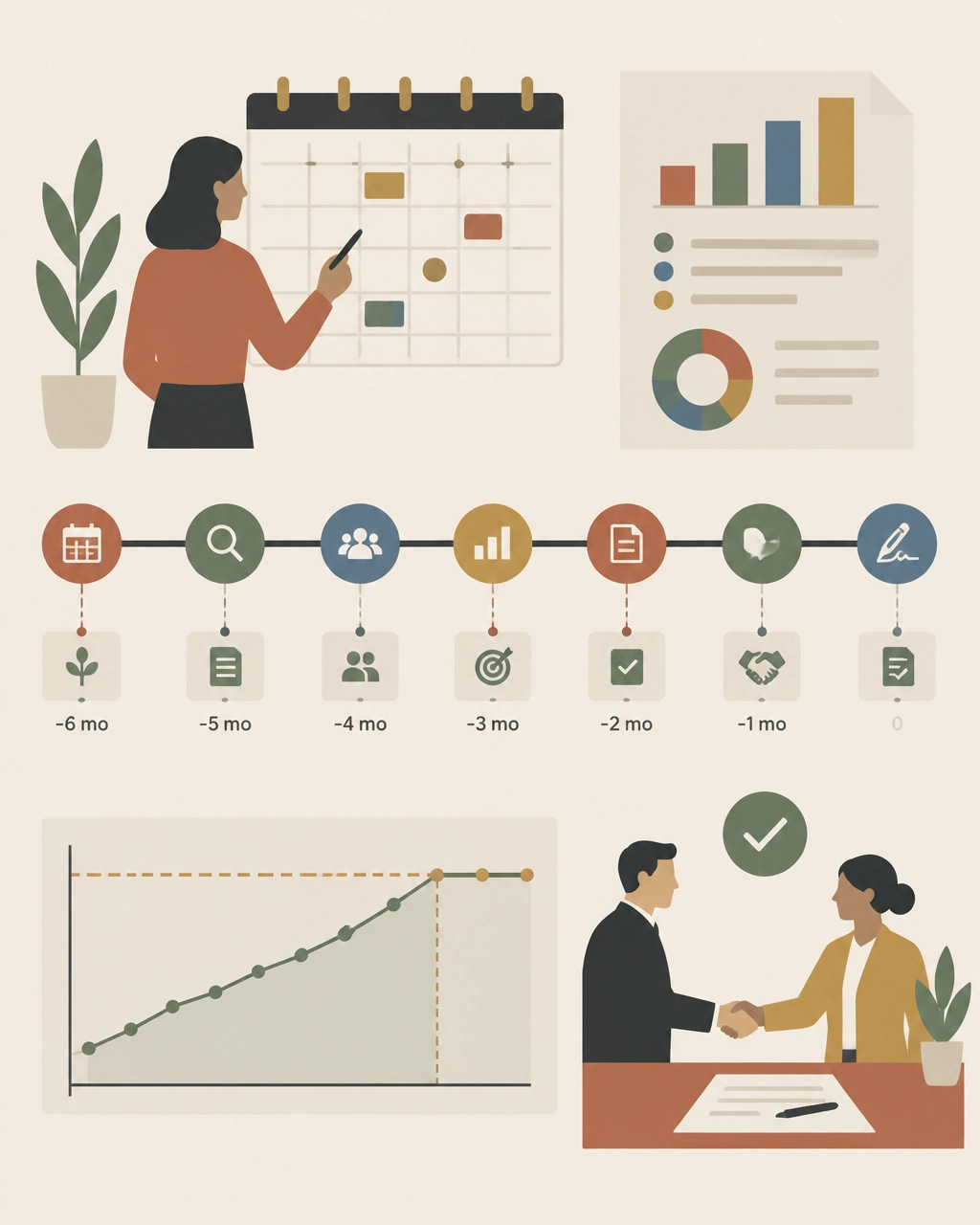
Begin at least six months before renewal. Earlier is better when the agreement is complex or the annual spend is significant.
A practical timeline:
- 9–12 months out: collect contract, usage, headcount, and invoice data
- 6–9 months out: complete the benchmark and identify scope changes
- 4–6 months out: set targets, prepare alternatives, and begin formal discussions
- 2–4 months out: negotiate pricing, escalators, true-ups, and risk terms
- 30–60 days out: finalize redlines and verify the commercial model
By the time the vendor presents a renewal quote, your internal target should already be set.
What 2026 buyers should watch closely
Three issues deserve special attention in the next renewal cycle:
AI and new product add-ons
New AI capabilities may be introduced as separate paid products, premium tiers, or expanded bundles. Benchmark them independently. Do not allow “new functionality” to obscure an increase in the effective cost of your existing deployment.
Phased roadmaps
If you plan to add modules later, negotiate future pricing now. Otherwise, you may lose the consolidation economics available when multiple modules are purchased together.
Contract flexibility
Workforce volatility, M&A, and budget pressure make true-down rights and reallocation provisions more valuable than ever. The cheapest contract is not always the one with the largest initial discount. It is the one that remains financially defensible when business conditions change.
Find out whether your Workday deal is above market
You do not need to wait for Workday’s renewal proposal to discover overpayment.
The Negotiator Guru helps enterprise teams benchmark every relevant SKU, expose unused or inflated scope, review contract risk, and build a negotiation strategy before the vendor sets the anchor. Our Workday negotiation specialists operate discreetly as an extension of your team.
With Right Price Benchmarking™, we identify what your agreement should cost and where the savings opportunity exists. If the contract warrants broader support, our Full Negotiation Support team can help plan, pressure, and execute the renewal.
We have delivered $1.05 billion in total cost impact globally, with average savings of 37% per deal. And if we cannot identify at least 10% savings, we do not take the deal.
Before your next Workday renewal, benchmark the agreement you have: not the proposal you are given. Start your assessment with The Negotiator Guru.
More resources
From Fortune 500 giants to fast-growing innovators, TNG has helped clients save 20% – 40%+ on enterprise software contracts — even when they thought it was impossible

How to Create a Salesforce Roadmap
In previous articles, we shared with you how the Salesforce machine operates. We shared with you how it structures its organization and the tactics it uses to maximize its revenue from your company.In this article, we are going to dive into your single most important weapon against Salesforce in your negotiation . . . Your Salesforce Roadmap.
What is a Salesforce Roadmap?
Simply put, a Salesforce Roadmap is nothing more than a table outlining:
- What you are going to buy
- When you are going to buy it
This sounds simple, yet most companies don’t go into a negotiation with Salesforce clear on these two points. As a result, Salesforce hijacks the conversation and creates a roadmap for them.
What you are going to buy
This question isn’t always as simple as it sounds.
Do you need Enterprise or Unlimited?
Do you even need premium support? Or would that money be better spent on a 3rd party consulting firm?
Have you run a utilization report to see how many of your licenses are actually being used?
Is marketing actually using that instance of Pardot you purchased three years ago?
The “what you are going to buy” conversation isn’t always easy. One company we worked with ran a utilization report to find that only 63% of their licenses had even been logged into in the past year. This means they were paying for 37% more licenses than they actually needed!
Another customer realized that a large portion of his organization could get by through downgrading to a lower license level. They were only using basic features that didn’t require them to be at the Unlimited License.
It’s easy to think you know exactly what you need going into a negotiation, but sometimes you need to do a bit more digging into understanding how each department actually utilizes the tool.
When you are going to buy it
Another common tactic Salesforce uses is to tell you that you cannot roll out licenses over the course of a three-year contract. Your rep will tell you that you need to buy them all up front now if you want to get a discount.
This ironically always works out in Salesforce’s favor as the added revenue from those dormant licenses makes up for the discount one rates. The truth is you can negotiate to roll out licenses at set periods of time throughout your negotiation.
In order to do this though, you need a clear roadmap and to create confidence with Salesforce that this is what you actually need and when you need it.
Why Is Building a Salesforce Roadmap So Important?
Before we dive into how to create this roadmap, let’s first dive into explaining why this roadmap is so important.
A roadmap is your best defense against divide and conquer
Remember the divide and conquer tactics we described in our guide on negotiating with Salesforce? We shared with you how Salesforce will make contact with multiple individuals and decision-makers throughout your organization.
Its goal with divide and conquer is to create conflicting stories which develop chaos in terms of what you actually need.
Creating your own Salesforce Roadmap helps you prevent against that.
When you create a roadmap and get buy-in from all your key stakeholders on that same roadmap, you create alignment within your organization. In addition to the roadmap, we are also going to give your internal stakeholders key talking points on what to say if Salesforce approaches them. It’s also important to know that timing is everything with regards to these key messages.
As a result of being aligned on talking points and what your organization actually needs, your organization begins to speak from one voice. Instead of having Salesforce gather conflicting stories from each department, they suddenly are left dumbfounded when they receive the same story from all contacts within the organization.
Flip-flopping your wants in the negotiation focuses the discussion on the wrong things
Whenever you don’t have your roadmap aligned, you spend your time in the negotiation with your rep going back and forth on how many licenses you need or what add-ons you do or don’t want.
Every time you go to your rep with a revision on your renewal because you and your team changed your mind, you are wasting a valuable chance to negotiate a key term or reduce your rates.
Without a roadmap, you will end up flip-flopping on what you want during the negotiation and spend your time focused on what licenses you are even going to buy instead of the price point or the terms. The entire negotiation gets focused on just figuring out what you need instead of getting you the best rates.
Your roadmap creates that clarity and alignment and lets you spend your time focused on getting you the best deal.
A lack of alignment undermines the key contact of the negotiation
Imagine for a moment that you are a Salesforce rep. You go into conversation with the Salesforce Admin who is your main point of contact in the negotiation. The Salesforce Admin request a 20% license count increase but is not interested in adding any new products or expanding their Salesforce footprint into any new departments.
Then two days later, your sales management team comes back from a basketball game with the CEO of your client organization. They tell you “we just met with the CEO, he wants to roll Salesforce out to his entire marketing department as well.”
As a Sales rep, you immediately jump to the conclusion that your Salesforce Admin is not the authority or decision-maker on this account. All respect you had for this Salesforce Admin’s decision-making ability has gone out the window.
As a result, that Sales rep treats the Salesforce Admin differently in the negotiation. He starts going around them and maximizing his divide and conquer tactics because he knows the Salesforce Admin is not in charge.
This is what happens when your organization is not aligned.
It undermines the individual who is the face of the negotiation. It doesn’t matter if it is a Salesforce Admin, CIO, or CFO.
Alignment and a roadmap gives power to the negotiator
Let us imagine another scenario for a moment here. Imagine that you are a Salesforce rep. You go into a conversation with your Salesforce Admin who is your main point of contact. The Salesforce Admin tells you they want to increase sales cloud licenses by 20% and consider a demo of Pardot in their marketing department.
Then two days later, your sales management team comes back from a basketball game with the client CEO. They tell you “we just met with the CEO, he wants to grow his licenses by 20% and is considering expanding Pardot into their marketing department.”
As a Sales Rep, you just heard consistency.
You heard that your Salesforce Admin is aligned with the CEO.
You heard that your Salesforce Admin is actually in charge of this negotiation.
When you have organizational alignment on your roadmap, it gives power to whoever is running your Salesforce Negotiation. It doesn’t matter of it is the Director of IT, CIO, or CFO. Whenever you have that alignment of stories, it gives that person in the negotiating seat power to drive the negotiation on their own.
When to Create your Salesforce Roadmap
We typically recommend companies start building their roadmap six to nine months prior to their negotiation. You are going to want at least three months to handle the actual negotiation with Salesforce so a six month runway gives you an additional three months to get that internal alignment.
Each organization is different, but that internal alignment won’t happen overnight. Give yourself some time to meet with all key stakeholders and achieve that internal alignment.
Three Steps to Creating your Salesforce Roadmap
A Salesforce Roadmap is not complicated. It is a simple table of “what you need” and “when you need it” over the next three to five years.
Even though most Salesforce renewals are only three years, it is helpful to plan five years in advance so you can think of a bigger picture of what may be coming down the line. This helps you in creating an aligned story for Salesforce at your renewal.
Step 1) Create a rough draft alone
If you are reading this, chances are you are the one who is driving the Salesforce negotiation. You have extensive knowledge of Salesforce and can probably fill out 80% of the roadmap on your own.
The key in this step is to document all of your ideas for the roadmap on paper.
You don’t want to go to your key stakeholders with a blank slate and build the roadmap from scratch together. That is not a good use of their time, and it is going to create too much debate.
By crystallizing your thoughts about Salesforce into a rough draft of the roadmap, you can share that document with others. It becomes a starting point for the entire roadmap discussion.
Step 2) Take the rough draft to key stakeholders for feedback
This rough draft of the roadmap is purely for internal use. Once you have this rough draft complete you are going to present this document, typically in the form of a PowerPoint presentation, to your key stakeholders within the organization.
This may be your CEO, CFO, CIO, COO, VP of Sales, Director of IT, Salesforce Admin, Sales Management Team, etc.
You are going to take this roadmap to them and say “This is what I believe our 3-5 year Salesforce roadmap looks like...what feedback do you have?”
As you go into these meetings you may find yourself saying, “I have an idea here but I don’t know exactly what X department needs.” This roadmap and these conversations are meant to help you refine the roadmap and clarify those needs with each department in the organization.
What is great about this step of the process is that this allows your team to have internal dialogues about what you need with Salesforce. Without doing this internal roadmap, these contacts would not be brought into the conversation until a contact from Salesforce had reached out to them.
Instead of letting Salesforce guide these conversations, you are getting in front of them and taking charge. This helps you own and drive the conversation.
Step 3) Gather all feedback and refine your roadmap
Once you have gathered alignment from each of your key stakeholders on the roadmap, you are going to want to take some time to sit down and refine that roadmap into a final polished version.
At this point, you are almost ready for entering the negotiation. But before that we need to build a communication strategy and negotiation plan.
Lastly, it's also important to realize that a Salesforce Roadmap is essential for SELA Agreements (Salesforce Enterprise License agreements). Read our guide for more details on how to renegotiate your SELA Agreement.

Confidential Clients: Why We Do It
For those of you wondering why we keep all of our clients confidential, our Founder and Senior Partner Dan Kelly provided a few key insights as part of a recent interview. We hope you appreciate learning why this is such an important guiding principle for TNG.
Moderator: Keeping your clients confidential is a pretty bold and respectable move… Why does TNG do it?
Dan: It’s a great question and one that comes up often during initial conversations with our prospective customers. We find that customers are more curious as to the reasoning versus questioning the legitimacy.
We treat each engagement with a customer as if it were a legal proceeding. We find that our ideal customers really appreciate how sensitive we treat our collaboration with their company and their most senior stakeholders/leaders.
From a logistical standpoint, some customers reach out to us when they are trying to commercially mediate what appears to be a potential legal situation with an external vendor. 95% of the time, we can handle the situation via commercial negotiation. If the situation does require any sort of legal support or litigation, our team is ready to quickly support and collaborate with our customer’s legal team based on our strict confidentiality and document handling standards.
Moderator: Did your background in the FBI contribute to your decision on this approach?
Dan: {Laughing} Yes, I think it probably did. There were two things that I was taught immediately upon entering my FBI career: 1) Before you make any questionable decision, think about how the outcome of your decision would look on CNN the next morning and 2) Classified information is best protected on a compartmented, need-to-know basis.
While our entire team doesn’t come from an Intelligence Community background, everyone is provided training on the importance of confidentiality and the proper procedures for protecting client confidential materials. I can confidently say, without a doubt, that our customer data and processes are more secure than most multinational law firms.
Moderator: When you have prospective clients looking to speak with references, aren’t you afraid of losing potential business if you’re not willing to share your client portfolio?
Dan: You know the business owner in me honestly thinks about this a lot. From an actual data standpoint, we know that if a prospective customer chooses not to work with us, it’s primarily due to cost and not caused from the lack of reference calls.
Another fact that we’ve proven over the years is that 3 out of 4 clients request repeat or ongoing support, so any lost opportunity from this topic is naturally superseded with our repeat customer business. That’s how I would prefer it anyway, as taking on a new customer brings its own inherent risks… it’s a two-way street.
Moderator: How do you make clients feel comfortable working with you if they aren’t able to speak with references?
Dan: My answer on this is simple: Everyone has friends. Do you honestly think any salesperson, no matter what industry, is going to refer you to a client that has had a sub-optimal experience? I am a Strategic Sourcing Expert, and so is the rest of the Service Delivery Team. When we worked for large companies, we often were told to ask for references. However, whenever we received reference contact information, we rarely called them to validate. This reference gathering process is an old school purchasing process for process sake, and we find our best customers find more trust in the fact that we were ranked as the 2nd fastest growing company in Minnesota by Inc Magazine.
Moderator: What are some other benefits that might not be apparently obvious of keeping clients confidential?
Dan: Excellent question... This is a passionate topic of mine of which I could honestly discuss for an hour. In the interest of brevity, a few of the top benefits include:
Ease of Contracting – No Publication
Most of our clients are very large multinational organizations. The Marketing and Legal departments inside of these companies are naturally very protective and risk adverse (for good reason) of their name brand, logo, etc. Since our customer contracts don’t include any language regarding “publication,” it eliminates unnecessary administrative burden, and legal review cycles, on both sides of the transaction.
TNG Client Protection
Most of our clients request that TNG be a covert silent advisor in the background (instead of an overt legal agent of the company). This means that the supplier in which our customer is negotiating with should never have knowledge of our involvement. By keeping all clients confidential, we eliminate any risk of the supplier later discovering our involvement.
Deter Sales Snooping
Without going into too much detail here, just know that large software companies have an incredible amount of financial resources. They employ individuals to be assigned, or even sit in, your organization to learn everything there is to know about your company in the interest of upselling their products and services. This also includes learning as much as they can about what companies are using external advisors to benchmark rates, processes, etc.

7 Most Common Mistakes to Avoid When Negotiating Your Salesforce Agreement
We commonly get the question: “What are the most common mistakes and/or things to avoid when negotiating a Salesforce Agreement?” So much actually that we thought it made sense to write a short article for all to consume.
A Customer Relationship Management (CRM) platform is commonly within the top 5 expenses within every CIO’s annual budget. The day-to-day operations of business serve as a natural distraction for all of us and, if you don’t negotiate contracts all day long, it’s near impossible to know all the information you need in order to successful prepare and execute a negotiation strategy. Negotiating a Salesforce contract is tricky and can be extremely complex. Don’t underestimate the time, effort, or expertise you’ll need, or you’ll quickly lose control of the entire deal.
Here are the 7 most common mistakes we find CIOs and IT Management Teams make when negotiating their Salesforce agreement:
1. Failing to prepare
While this may not come as a surprise, the single most common mistake is failing to allocate enough time, resources, and expertise to properly prepare for the negotiation.
Ask yourself this: Would you ever go to a car dealership and take the first car they offer without first doing your research on price, warranty, etc.?
As a CIO or IT management team, you should not make assumptions or rush through the process of finding and/or negotiating your CRM platform. No matter whether you are searching for a new CRM platform or simply renewing your existing agreement, make sure you take time to understand the business and digital capabilities you are looking to acquire and/or augment. Take time to conduct interviews across the organization and create a business canvas of those needs to create a simple viewpoint of the wants and needs of the entire organization.
We advise our clients to start 6 months prior to any anticipated contract execution date.
2. Failure to look at the bigger picture
We find CIOs, IT Management Teams, and Salesforce administrators are great at thinking about the relatively short-term needs of their organization but commonly forget to keep the big picture in mind. As with any strategic supplier relationship, you need to think about how the pricing, requirements, and relationship with Salesforce will look over the next 3-5 years. Instead of looking at the short term, think strategically about your organization's goals and the relationship you want to build. You need to approach your CRM vendor with a long term mindset. Look at how their services will be beneficial to your organizations in terms of growth and transformation. Make sure you prepare a compelling forward-looking strategy that is deliberate in identifying how the Salesforce relationship will benefit your business. It’s equally as important to understand how Salesforce views its relationship with you. Only after both sides understand the current state of each organization can it build a plan forward.
3. Focusing too much on price
Our clients are almost always surprised when we say this statement. While price is ultimately very important in any commercial agreement, it’s equally as important to validate that you have the proper products and services for your organization.
“Right Size for the Right Price” – Dan Kelly, The Negotiator Guru
If you’re a new customer, make sure you’re not overbuying at the start…remember, adoption always proves to be slower than you will anticipate when introducing a new CRM platform.
Subsequently, it’s all too common for the sales team to overweight your 1st year agreement as they are solely focused on capturing as much revenue as possible from your account.
If you’re an existing customer, conduct an internal audit of your products and services that are currently part of your Salesforce ecosystem. Make sure not only these products and services are being used (the easy part) but also that they’re being used appropriately. Very often we’ll find opportunities for our clients to downgrade while still achieving the same business functionality required.
4. Not considering all your options
It’s important to keep a pulse on the marketplace…there are multiple CRM platforms out there and while Salesforce is the industry leader they may not be the best fit for you.
Subsequently, if you are a current Salesforce user then it’s equally as important to conduct a deep dive assessment on how other peers in your industry are using Salesforce. A properly run CRM platform should not only optimize the sales process but also drive efficiencies in back office operations, etc. If you identify (and you most likely will) new areas where Salesforce can assist your business, carefully bring this up as an opportunity during the negotiation process. Again, we urge the word “carefully.”
5. Not developing Executive Level relationships
As written in previous articles, Salesforce has set-up its very own incredibly effective sales machine. While we won’t reiterate the previously written articles it’s important to call out that most Salesforce customers underestimate the importance of developing and engaging VP level and higher relationships at Salesforce. Only these levels have decision making authority on your account. If these individuals are on your side, and understand your story, you’ll be far more successful in your negotiation.
6. Failure to create a strategic internal communication plan (as part of your negotiation strategy)
Almost everyone fails at developing a bulletproof internal communication plan. While the saying “speak from one voice” is widely used and understood in negotiations, it’s not enough to simply rely on human beings to say exactly the same thing at the same time. Instead, we advise our clients to develop a communication plan that provides key talking points for different levels of the organization. These talking points all align to the same objective but are developing in a way that reinforce message authenticity for that specific stakeholder.
7. Neglecting to include your C-Level Executives in the negotiation
Related to the previous point, we find that the majority of organizations we advise have historically tried to limit and/or eliminate any C-Level interaction with Salesforce. This is naturally understandable (based on common thinking) but actually a serious mistake.
Salesforce takes great pride in, and places great importance on, developing relationships directly with their customer’s executive team.
We advise clients not to fight this point but leverage it. We admit that we used to get this point wrong ourselves. We used to ensure the C-Suite knew not to say anything and only redirect messages to a single point of contact. The big problem with this is that the c-suite really likes to talk! Instead of fighting this natural instinct (and skillset) we advise our clients to leverage it by creating a C-Suite communication and engagement plan that empowers the negotiation plan.
Start with a CIA.
That’s a Client Intake Assessment.
Upload your contract data or schedule a discovery call. If we can’t identify at least a 10%+ from a TNG Right Pricing™ opportunity, we won’t take your money (but we will offer you some free advice!)
